
Last year I published a blog The Need for Speed, floating ideas for solving a long-standing problem, the need for quicker environmental approvals. In the lead-up to Treasurer Jim Chalmers’ economic roundtable this week, regulatory ‘streamlining’ is very much back at the top of the public policy, so it’s time for another look. AI is being held up as a panacea for speeding up the process but this overlooks the main issues causing the delay (lack of information and poor coordination between state and federal processes). However, the old EPBC Act has some unused potential that might change the game.
The Albanese government’s invitation-only Economic Reform Roundtable, set to convene in the Cabinet Room on 19 August, seems to have become a magnet for every bold reform idea that has ever hit the ‘don’t-frighten-the-horses’ wall of modern Australian politics.
Initially focused on Australia’s low and stagnant productivity rates, the Reform Roundtable has morphed into a much more ambitious vehicle for discussions on tax policy, the Budget, better regulation, AI and more.
In fact, some think the process has gotten a little out of hand. Michelle Grattan in The Conversation reports one observer as commenting that ‘Chalmers has opened a can of worms and everybody has got a worm’.
Two particular ‘worms’ bearing the names ‘cut red tape’ and ‘cut green tape’, are linked to two of Australia’s biggest problems, the housing crisis and the lagging transition to renewable energy respectively. And they’ve been getting plenty of attention.
Of Abundance and complexity
In fact, Treasurer Chalmers has allocated not one, but two roundtable sessions — an entire morning in a two day meeting — to discussing ‘better regulation and approvals’. He’s being reading Klein and Thompson’s recent book Abundance and has drunk deeply of its message that progressive forces, including the environment movement, have overcorrected, weighing government down with so many worthy objectives and protective requirements as to become major barriers to progress in themselves.
I don’t quite see it like that. Regulatory complexity and delay is a real problem, but the highest level problems we are trying to solve — like the shortage of housing and decline of the environment — are much more multi-dimensional than that, involving structural factors like COVID-induced social change, skills and materials shortages, NIMBY-ism and policy-induced distortions to the housing and energy markets.
If we were looking to allocate blame for these problems, I would allocate a fair dollop to the parties of government, who have traded reforming zeal for self-protective small target strategies and electoral baubles. But allocating blame is a waste of time; we are where we are.
Returning to Michelle Grattan’s worm quote, she went on to report that ‘even those close to the roundtable are feeling overwhelmed by the extent of the worm farm.’ That’s entirely understandable, as governments have been standing on the policy hose for too long and face a lot of built up pressure for fundamental reform.
Of course, reform means winners and losers. In that context, cries of ‘red tape’ and ‘green tape’ provide convenient ‘look over there’ distractions for potential losers while providing ready-made headlines.
Specifically, Australia’s national environmental law, the EPBC Act, is again under fire for gumming up the works. Despite claims last year by then-environment Minister Tanya Plibersek that she was approving wind farms at ‘the fastest rate in history’, a recent analysis published by a big law firm claims that none of the 76 renewables projects referred for EPBC approval in 2023 and 2024 across 3 states had received final approval.
Distraction it may be, but there’s no denying that it’s still a real problem.
AI can fix it!?
That explains why, in the run-up to the roundtable, leaks revealed that Treasury had briefed Chalmers with some suggested solutions. Hardly surprising says the Treasurer, but what is surprising is that Treasury seems to think that the solution to ‘green tape’ lies in a national artificial intelligence plan focused on speeding up approvals.
I find this somewhat mystifying. A major cause of delay in environmental assessment is lack of environmental data; can AI compensate for absent data? AI has a reputation for making things up: in all my years in environmental regulation and reform, fabrication never occurred to me as a solution! Another significant cause of delay is inconsistency between federal and state laws, policies, bureaucratic cultures and politics; can AI really address any of these?
Surely not, but I won’t get carried away with my scepticism because I’m no AI expert and wouldn’t want to rue the day I cast aspersions upon it.
Could we squeeze a little more out of the old EPBC jalopy?
In the meantime, I’ve tried to come up with something more immediate and practical, using an old jalopy we already have, the EPBC Act as it currently stands.
In parallel with the roundtable, the government had also asked the Productivity Commission (PC) to take a fresh look at some productivity issues.
This has yielded a couple of interim reports, including one entitled Investing in cheaper, cleaner energy and the net zero transformation. A major theme of this report is the need to speed up approvals for renewable energy infrastructure and they’ve floated some ideas like setting up a specialist ‘strike teams’ for priority projects and appointing a Coordinator-General to keep things moving along.
The PC has called for submissions in response and so I’ve made one. I’ve got some sympathy for their ‘move it along’ approach but have proposed my own variation on that theme.
The idea I’ve floated is to use EPBC powers that have never been used before, to appoint commissioners to assess proposed renewable energy projects by inquiry.
That may sound like a recipe for even more process, but with the right approach, it’s not.
Inquiries have two distinctive features. The first is that the environmental assessment is done by one or more commissioners rather than by the proponent. Appointing independent outsiders can do a lot for the credibility of decision-making, especially because the EPBC Act requires that there be at least one public hearing.
The second and more significant feature is that the minister has enormous flexibility in setting the terms of reference and procedures of an inquiry. This allows them for example to ensure that the process is not legalistic, but in particular it allows them to set a date for reporting; this of course delivers a significant increase in certainty.
Most states and territories have similar processes available to them, and a corresponding ability to tailor inquiry processes and timelines (perhaps all of them do: I didn’t have time to check every jurisdiction.). This opens the possibility of the federal and state governments acting in concert on priority assessments like large renewable energy projects, with both governments setting complementary terms of reference and even appointing the same people to conduct the assessment.
Provided governments were prepared to work closely (but not collusively) with each other and with proponents — a big ask, but offering big reward — I think they could assess and approve important projects like solar and wind farms under a single process and agreed timeframe, all without changing the law. And once it’s been done once, the way is open to operate a virtual renewables assessment production line.
I hope I’m right about this — perhaps the reason it hasn’t been tried before is that there’s a fundamental impediment that I’ve overlooked! In any event, an expeditious clean energy transition is so important that I thought I’d chance my arm.
A good time to stay tuned
With the Economic Roundtable, the Productivity Commission and the federal government all looking to generate environmental reform proposals by Christmas — rumoured to be the federal government’s deadline for tabling environmental reform legislation — we’re living in interesting environmental times, to which I’ve tried to add a little interest of my own.
Stay tuned to environmental reform radio!
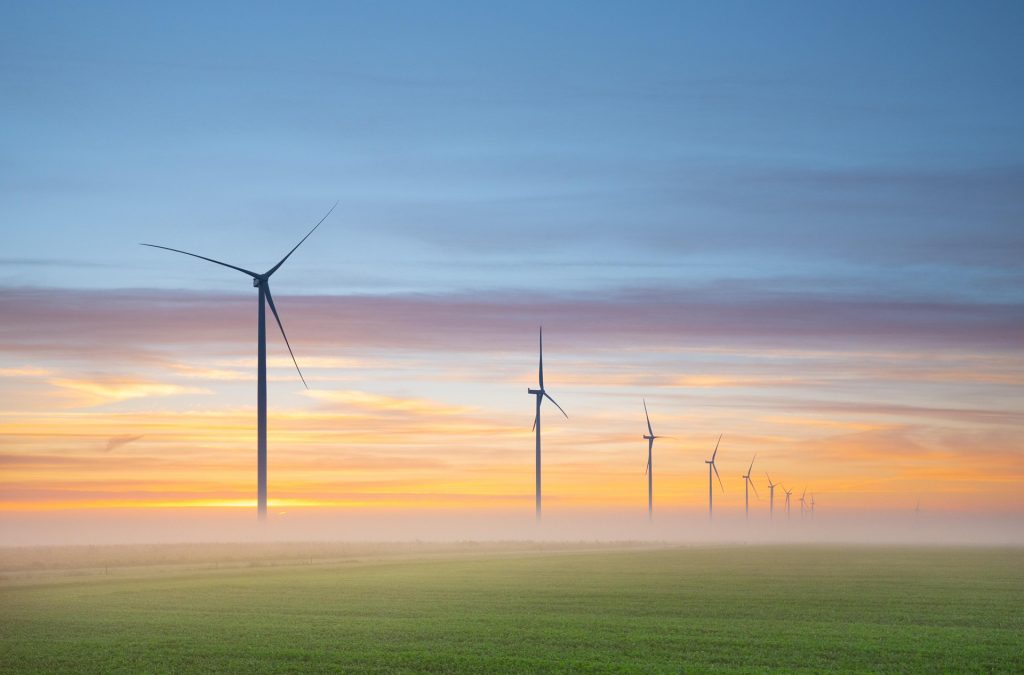
Banner image: Despite claims last year by then-environment Minister Tanya Plibersek that she was approving wind farms at ‘the fastest rate in history’, a recent analysis published by a big law firm claims that none of the 76 renewables projects referred for EPBC approval in 2023 and 2024 across 3 states had received final approval. (Image by Rudy and Peter Skitterians from Pixabay)
Hi Peter
Thanks for this piece.
It is a sign of our culture’s dominant frames that, as we rush towards economic collapse due to environmental degradation, our most influential players focus foremost on speeding up the economic train.
Many have argued that our environmental legislation can deliver both better economic and environmental outcomes. That is perhaps true, at least in the short-term, but unfortunately the nature of one-off approvals is the stepwise ‘salami-slicer’ of environmental degradation. The pressure is always on to approve projects and to compromise the environment, and I saw a study a few years ago which found that roughly 98% of projects were approved in some form through the EPBC Act. This is partly how we got to this parlous environmental state. Truth be told, we could get much faster decisions on a number of egregious proposals, if they were rejected very early in the process. In this regard, one thinks of the Carmichael mine and north-west shelf extension (although of course the act does not have the power to regulate emissions directly.
Cheers
Jonathan
I like the idea of using Inquiries to move things along – if done well and inclusively it could also have benefits for community and stakeholders to feel heard, noting that community concern is a key challenge for getting renewable projects up.